The rapid growth of artificial intelligence and cloud computing has increased global demand for data centers. Construction has almost doubled from 2017 to 2023; and the growth shows no signs of slowing.
The United States has nearly 50% of the world’s data centers. Spending on data center projects is expected to rise 13% in 2026 compared to 2025.
These facilities run continuously and consume electricity on the scale of small cities, which makes their piping systems critical. Piping infrastructure helps to effectively manage the heat generated by circulating chilled water, or other fluids, and control temperatures throughout the facility. Owners of the data centers also want to protect their investments with additional piping to support specialized fire suppression systems.
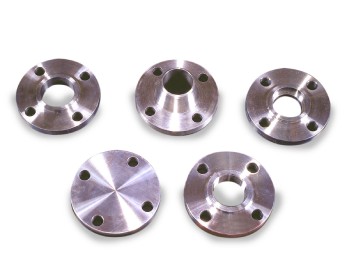
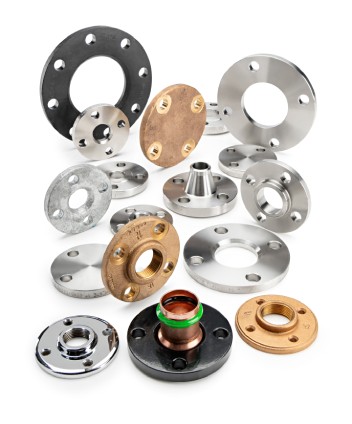
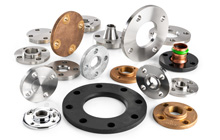
Wholesalers play a key role in helping customers design and build these data centers by offering customizable piping solutions. Among the most important piping components in these systems areANSI flanges, which ensure secure, leak‑resistant connections. The most common types of pipe flanges used in data centers include:
As data center construction speeds up, demand for these pipe flange types will keep rising. This makes them essential inventory items for any wholesaler serving the data center market.
Specifications can require ANSI flanges in many different materials. In flanges, manufacturers most commonly use the following alloys:
There are several benefits that pipe flanges bring to data centers:
Leak-proof seals to prevent dangerous leaks from happening
Mechanical strength to provide structural integrity to the system
Maintenance access which allows for disassembly without worry of destroying the whole network
Versatility to provide the ability to connect dis-similar materials with a gasket between mating surfaces
Consistency in line with international standards
Why Stainless Steel Flanges Dominate
Stainless steel is the alloy most selected by engineers and contractors for piping systems used in data centers. Stainless steel flanges are vital in data center cooling systems because of the alloy’s natural properties. As data centers continue to evolve, their cooling infrastructure must advance alongside them.
The computer servers make up the heart of a data center and operate under demanding conditions and generate significant heat, requiring reliable and efficient cooling solutions. While there are several alloys of stainless steel, data centers commonly use the 300 series, specifically Type 304 and Type 316 stainless steel.
Type 316 is resistant against chlorides and corrosion at high temperatures which is critical primarily in the liquid cooling loops. Type 304 stainless steel is traditionally used for more general‑purpose systems, where chemical and corrosion resistance is not as critical.
Because the cooling system is essential for maintaining optimal operating conditions, the materials used in that system must deliver high performance and reliability. Stainless steel provides several key properties that make it ideal for these demanding environments, including:
Exceptional corrosion resistance
High strength under pressure
Thermal stability and durability
Enhances overall system longevity
Other Alloys Used in Data Centers
Carbon and Alloy Steels
Carbon steel, specifically ASTM A36 or ASTM A572 Grade 50, and other types of ally steels, 4xxx series for example, are used for data center projects. Engineers choose this alloy because it is strong and absorbs & dampens vibration well. This helps create a more stable and reliable environment.
While less expensive than stainless steel, these types of steels have low corrosion resistance; and as a result, are often treated with a special coating.Given the nature of the coatings, and the data center environments they are placed in, they can flake off over time; and therefore are often used in less critical systems within the data center.
Duplex Stainless Steel
Duplex stainless steel allows for design flexibility within certain areas of a data center.Having greater chemical and corrosion resistance to 316 stainless is a differentiator, it is important to note how temperature impacts Duplex.
While Duplex stainless steel has a higher thermal conductivity than 316 (it will retain and transfer the heat longer) it has a lower coefficient of thermal expansion than 316 (it will expand and contract less) making it a better selection for areas of temperature fluctuation.
However, it cannot be used in high temperature areas (where 316 would be a better selection), and has a higher associated cost.
Overview of the Most Common Flanges Used in Data Centers
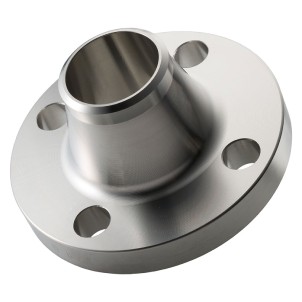
Weldneck Flange
A weldneck flange is a pipe flange with a long, tapered hub designed for butt‑weld attachment. It is a preferred choice for main chilled water supply and return lines. Key benefits include:
Use in high‑pressure, high‑temperature systems
Weldneck design provides high strength and reduces stress at piping connection points
Lower long‑term maintenance costs
Weldneck flanges also offer reduced long‑term maintenance requirements due to their lower likelihood of leaks or failures.
ANSI stainless‑steel weldneck flanges are widely used across many industries, and data centers can now be added to that list. Weldneck flanges are available in multiple alloy options to meet system requirements.
ALLOY TYPE
SPECIFICATIONS
SIZE RANGE
Stainless Steel
ASTM A182 F304/316L, 347H, 310S
Small to Medium: ½” to 24”
Large: 26” to 48”
Carbon Steel
ASTM A105, A350 LF2, A694
Small to Medium: ½” to 24”
Large: 26” to 60”
Alloy Steel
ASTM A182 F11, F22
Small to Medium: ½” to 24”
Large: 26” to 48”
Nickel Alloy
Inconel 600,625,718
Hastelloy C22, C276
Monel 400
Alloy 20
½” to 48”
Duplex Stainless Steel
ASTM A182 F51, F53
Standard: ½” to 24”
Large: 26” to 48”
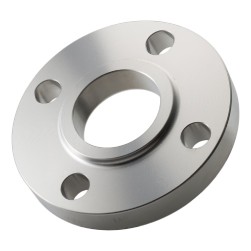
Slip-On Flange
A slip‑on flange is a pipe flange with a low‑profile hub that is attached to a pipe using one or two fillet welds. It is the most common flange in secondary closed loops, low‑pressure systems, and small‑diameter piping. Key benefits include:
Slides into place easily because the flange bore is slightly larger than the pipe’s outer diameter
One of the simplest flange types to install
Lower overall cost compared to other flange types
Their growing popularity in these applications makes slip‑on flanges a strong inventory choice for wholesalers.
Slip‑on flanges are available in multiple alloy options to meet a wide range of system requirements.
A lap joint flange is a two‑piece, loose, ring‑shaped pipe flange. It is designed to slide over a pipe’s stub end, allowing the flange to rotate. Key benefits include:
Allows easy bolt‑hole alignment since the flange can be rotated
Suitable for low‑pressure applications
Reduces wear on more expensive alloys
Lap joint flanges commonly appear in systems where maintenance requires frequent disassembly.
For wholesalers, lap joint flanges are an economical option that installers appreciate, especially when bundled with stub ends.
Lap joint flanges are available in multiple alloy options to meet a wide range of system requirements.
ALLOY TYPE
SPECIFICATIONS
SIZE RANGE
Carbon Steel
ASTM A105, A350 LF2
Standard: ½” to 24”
Large: 26” to 60”
Stainless Steel
ASTM A182
½” to 24”
Alloy Steel
ASTM A182 F11, F22, F91
Standard: ½” to 24”
Large: 26” to 60”
Nickel Alloys
Inconel 600, 625, 718
Monel 400
Hastelloy C276, C22
Alloy 20
½” to 48”
Duplex Stainless Steel
ASTM A182, ASME SA182
½” to 24”
Raised Face Flanges
Raised face flanges have an elevated surface above the bolting circle where the gasket is positioned.This raised are creates a seal when compressed against a soft, flat, or semi-metallic gasket.Raised face flanges are designed to concentrate pressure on a smaller gasket area which gives the joint added strength to contain higher pressures.
In data centers, they are the most common sealing surface for piping connections. Raised faces benefits include:
Higher pressures
Reliable, consistent sealing
Most common face-type among ANSI flanges
The most common alloy for forged raised face flanges is stainless steel. As mentioned earlier, other alloys include: carbon steel, duplex stainless steel, alloy steel, and nickel alloys.
Choosing the Right Flange for a Data Center Project
When choosing the right flange for a data center project, engineers must consider several critical factors:
1) Identify the pressure and temperature of the fluid.
2) Select a material that can support the fluid at the system’s operating pressure and temperature.
3) Determine the required pipe size.
4) Evaluate any alignment challenges within the system.
5) Identify required maintenance access.
6) Determine the project budget and any cost constraints.
For wholesalers who want to support the needs of engineers and contractors in the data center market, it is important to stock up on the flanges that are outlined above.Combining the flanges with stub ends, gaskets, and bolts as a packaged and bundled solution will support wholesalers growth strategies, as well as the contractor’s project completion.
Having the right mix of products to provide reliable and fast delivery will be crucial during tight construction timelines.
Merit Brass: Your Partner for Data Center PVF Solutions
With over 89 years of experience in the PVF industry, Merit Brass can also be a trusted partner for data center PVF solutions.,Merit’s history of providing quality products with unmatched customer service allows us to deliver stainless steel and corrosion‑resistant alloy products these mission critical environments demand.
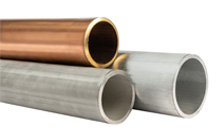
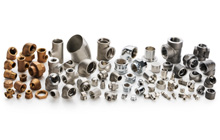
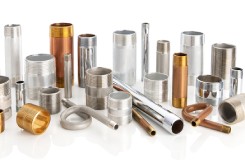
With one of the industry’s deepest and most reliable inventories, Merit ensures fast access to ANSI raised face flanges , pipe, valves and pipe fittings that meet rigorous quality and compliance standards.
Merit’s strong reputation for reliability is backed by deep technical expertise, this helps wholesalers choose materials with confidence.
Whether you need project support, help planning inventory for upcoming builds, or guidance on the best products for high‑performance data center applications, Merit Brass is ready to assist.
Conclusion
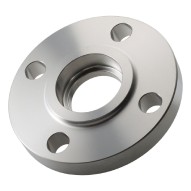
Weld neck, slip‑on, socket‑weld, lap joint, and raised face each help keep data center cooling systems safe and efficient. Their strength, reliable seals, and easy servicing make them vital for chilled water loops and condenser water systems. They are also key for CRAC/CRAH units and emergency backup equipment.
With data center construction speeding up, wholesalers who stock these in-demand flange types can better support contractors. They can help avoid project delays and build a stronger position in this fast-growing market.
Merit Brass is ready to help. With large inventories, corrosion-resistant stainless options, and trusted technical expertise, Merit supports PVF wholesalers. Merit gives them what they need to succeed.
For inventory guidance, project assistance, or product recommendations, connect with Merit Brass today.
What are flat faced & MSS Flanges not a good option for data centers?
Flat faced and MSS flanges are not a good option for data centers because modern cooling systems operate in high performance and high-pressure environments. Engineers designed these flanges for low-pressure and low-temperature applications. When exposed to changing loads, common in data center cooling systems, they are more prone to seal failures.
What is the difference between slip-on and lap joint flanges in data systems?
Lap joint flanges are placed over a Stub End, which has been connected to the Pipe and allows them to rotate around the Pipe.Slip on flanges are attached directly to the Pipe, and cannot rotate.They would both be considered suitable for low to medium pressure applications.